December 17, 2027. Mark the date.
That is when The Lord of the Rings: The Hunt for Gollum arrives in cinemas worldwide — the first live-action return to Middle-earth in over a decade, directed by Andy Serkis, produced by Peter Jackson, and already carrying the weight of one of the most devoted fan communities in the history of storytelling. The story will follow Gollum across the dark years between The Hobbit and The Fellowship of the Ring, told — for the first time — from the inside of that fractured, pitiable, terrifying mind.
Hundreds of millions of people will watch it.
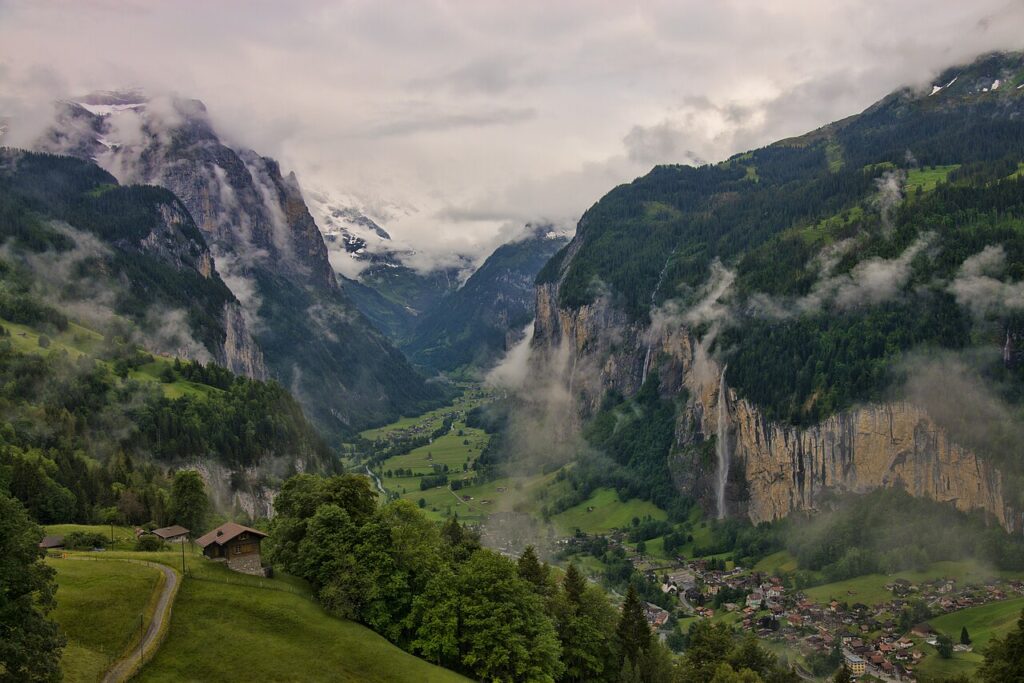
Most of them will have no idea that the world they are watching was assembled and dreamed into existence in this valley in Switzerland.

The Hunt for Gollum, a Lord of the Rings prequel
The Hunt for Gollum is effectively a prequel of the Lord of the Rings trilogy where the story of Gollum gets revealed:
Before the Fellowship, one creature’s obsession holds the key to Middle-earth’s survival – or its demise.
In The Lord of the Rings: The Hunt for Gollum, we meet young Sméagol – an outsider drawn to trinkets and mischief – long before The One Ring consumed him and began his tragic descent into the tortured, deceitful creature Gollum. With the ring lost and carried away by Bilbo Baggins, Gollum finds himself compelled to leave his cave in search of it.
Gandalf the Grey calls upon Aragorn, still known as the ranger Strider, to track the elusive creature whose knowledge of the whereabouts of the ring could tip the balance toward the Dark Lord Sauron. Set in the shadowed time between Bilbo’s birthday disappearance and the Fellowship’s formation, this perilous journey through Middle-earth’s darkest corners reveals untold truths, tests the resolve of its future king, and explores the fractured soul and backstory of Gollum, one of Tolkien’s most enigmatic characters.
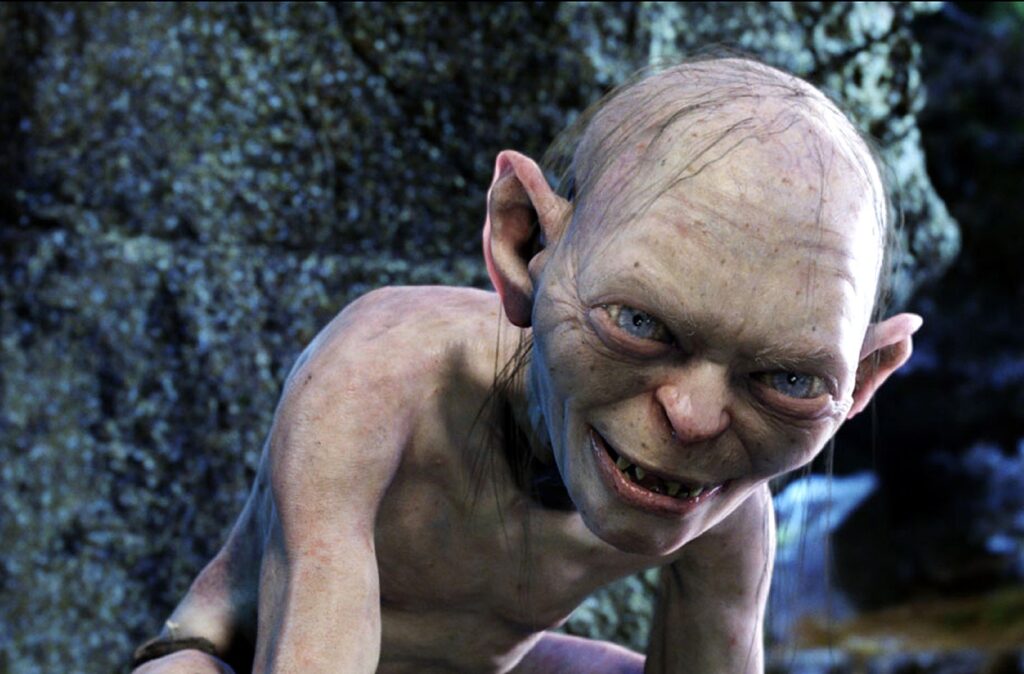
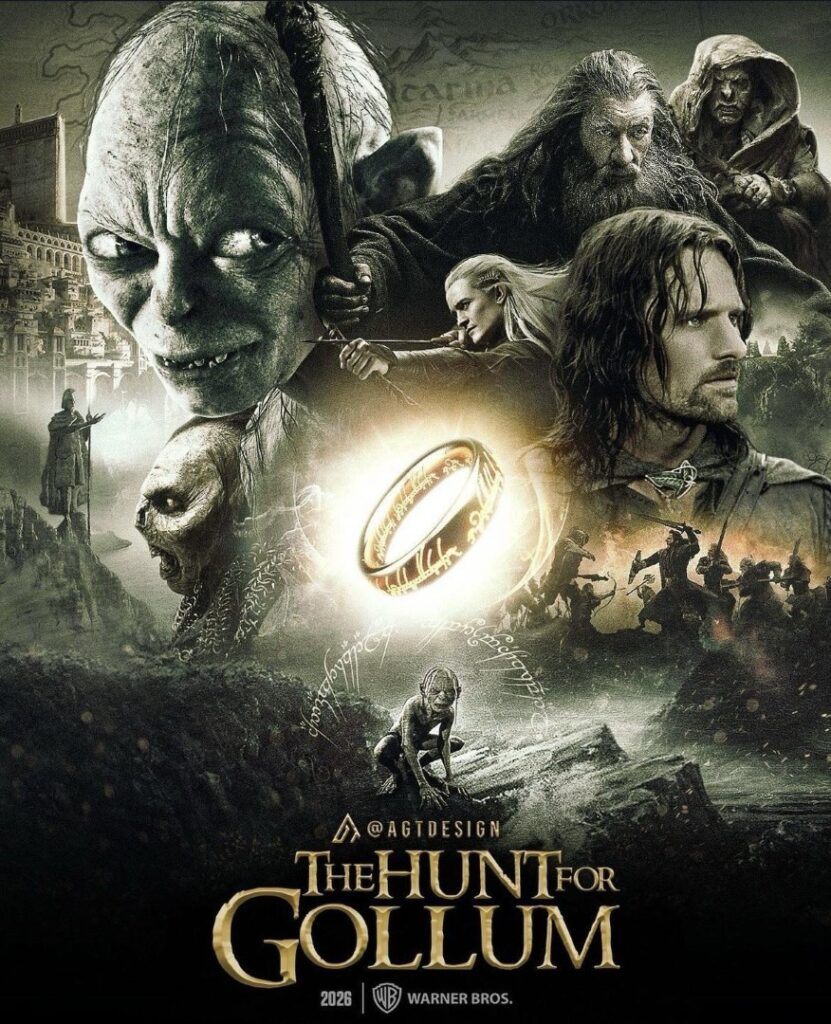
Directed by original cast member Andy Serkis, produced by Peter Jackson, and written and produced by Fran Walsh and Philippa Boyens – the creative team behind the Oscar-winning trilogy – this live-action movie bridges the beloved films with new characters, returning heroes and a deeply engaging origin story that resets the stage for, and changes everything you know about, the legendary Lord of the Rings trilogy.
The story however, started all the way back in 1911…..
The summer of 1911
In August 1911, a nineteen-year-old student from Birmingham named John Ronald Reuel Tolkien joined twelve companions for a walking holiday across the Alps. They sailed from Dover, crossed France, and arrived in Interlaken — the town between the two lakes, at the foot of the Jungfrau massif — with rucksacks on their backs and no particular plan beyond south.
He was not yet a writer. He had not yet invented a language, populated a mythology, or imagined the high passes of a fictional mountain range that would one day be traversed by a fellowship of nine. He was a scholarship boy from King Edward’s School on his first time abroad, walking because it was the cheapest way to travel and because the mountains were there.
What he walked into changed everything.
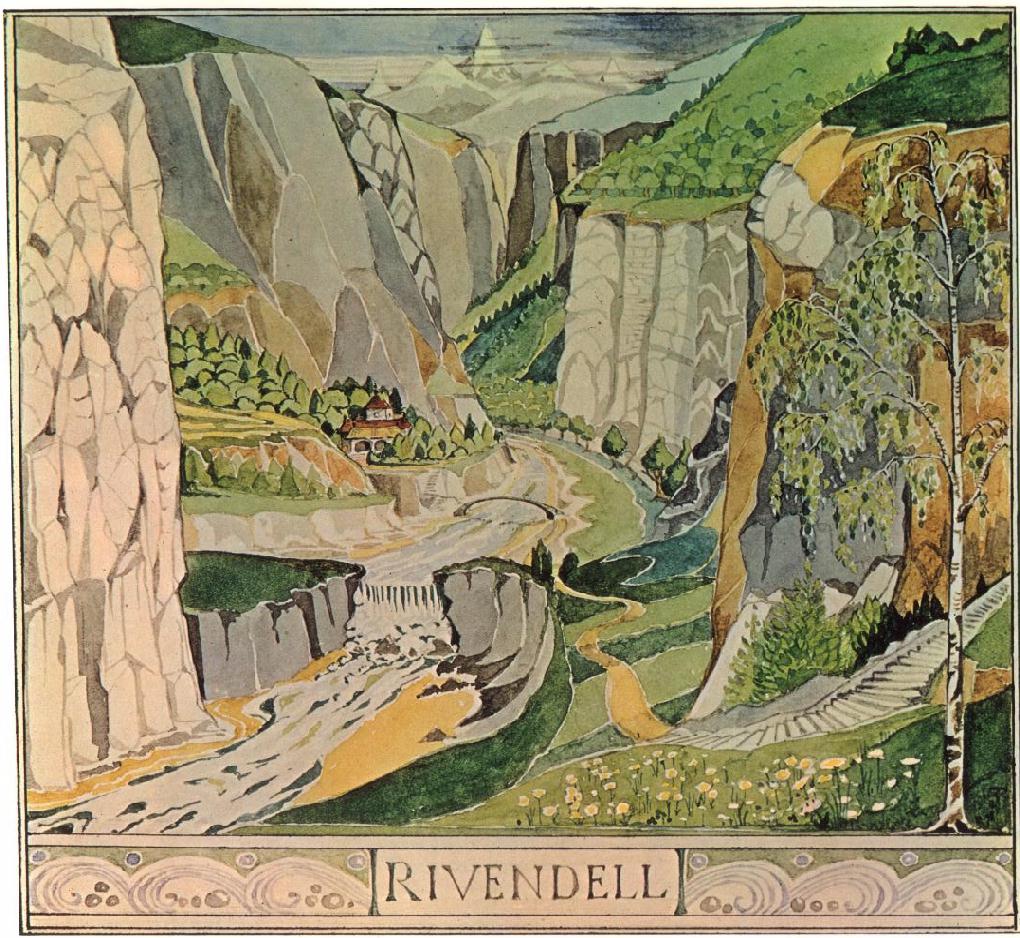
The party ascended from Interlaken into the Lauterbrunnen Valley — a long, narrow cleft of sheer limestone walls hung with waterfalls, the valley floor impossibly green below the grey rock. They followed the path south past the Staubbach Falls, that same cascade which had stopped Goethe in his tracks in 1779, which had given Byron the landscape of Manfred in 1816, which Tchaikovsky had painted in music in 1884. They ascended to Wengen and continued up to the Wengernalp meadow, where the full north wall of the Eiger, Mönch, and Jungfrau fills the sky across the valley. And Tolkien sketched it himself with a remarkable resemblance to it.
They slept rough. Tolkien described it in his letters: “we slept rough — often in hayloft or cowbyre.” The cowbyres of the Wengernalp were exactly that kind of building — stone, ancient, smelling of animals and hay, the same structures that had sheltered Alpine travellers for centuries before the first hotel was built on the meadow in 1865.
He was nineteen years old, lying in the dark, looking at the Silberhorn rising above the valley.
He was building a world.
What Tolkien carried back
The evidence is in his own hand.
In 1944 — thirty-three years after that summer walk — Tolkien wrote to his son Christopher, who was stationed abroad during the war. He described the Jungfrau with deep regret:
“I left the view of Jungfrau with deep regret, and the Silberhorn sharp against deep blue, the Silvertine (Celebdil) of my dreams” The word sharp against deep blue.
The specific peak. The specific quality of light. Three decades later and the image was still exact.
He identified the Silberhorn — the secondary peak next to the Jungfrau above Lauterbrunnen, the sharp needle of ice visible from the valley floor — as Celebdil, the peak called Zirakzigil in Elvish, the summit above the Bridge of Khazad-dûm. His own sketches of Rivendell, made in 1937, bear an astonishing resemblance to the Lauterbrunnen Valley: the high walls, the hanging waterfalls, the impossible verticality, the sense of a place held apart from the ordinary world by the geology that surrounds it.
The Last Homely House, the most welcoming refuge in the whole of Middle-earth, sits in a valley that looks exactly like a valley fifteen kilometres south of Interlaken at the trailend of that Lauterbrunnen Rivendell valley. This is the Obersteinberg Inn, where Tolkien’s signature is present in the guestbook. The Misty Mountains — the great barrier range that the Fellowship must cross — rise from the visual grammar as the Eiger, Mönch, and Silberhorn seen from the Wengernalp at dawn. – These are the real misty mountains including Durin’s peak
And it is below and within these Misty Mountains that Gollum lives for 500 years in the great Lord of the Rings books.
Tolkien was not the first extraordinary mind that this landscape had unlocked. He was the last of a century-long procession of poets, composers, painters, and engineers who came to this valley and were broken open by it in ways they could not entirely explain. Goethe. Byron. Shelley. Wagner. Tchaikovsky. They all stood at the same waterfall, looked at the same mountain, and carried something home. Tolkien assembled the evidence of that breaking into the most widely read fictional universe ever created. Over 150 million copies of his books have been sold. The Silberhorn is still there, unchanged, above the same valley.
Gollum, the creature in the dark caves of the Misty Mountains
The Hunt for Gollum is not a comfortable story.
Philippa Boyens, who helped write the screenplay, describes it as “quite an intense story — a specific chunk of incredible untold story, told through the perspective of this incredible creature.” The film covers the years after Gollum loses the One Ring to Bilbo in the dark under the Misty Mountains — the decades of wandering, of hunting, of being hunted in turn by Gandalf and Aragorn and eventually by Sauron’s servants. It is the story of what it means to be defined entirely by a loss you cannot accept.
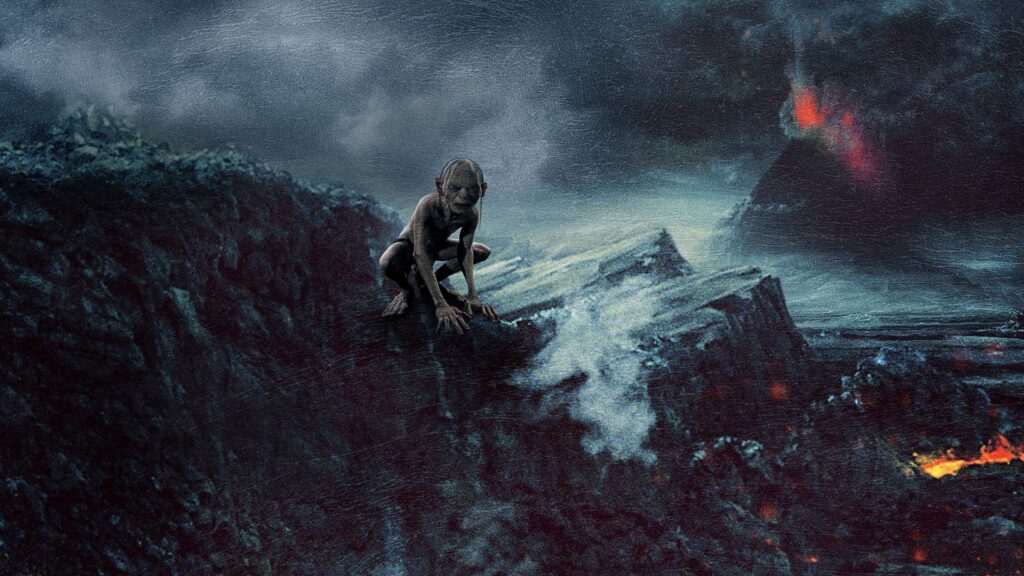
Gollum is Tolkien’s most psychologically complex creation. The creature who was once Sméagol — a hobbit-like being with a birthday and a name and a life — hollowed out by five centuries of obsession into something barely recognisable as the thing he began. Tolkien called him pitiable. He also gave him the last act of the story: it is Gollum who destroys the Ring in the end, at the one moment when all other agency has failed. Whether that is redemption or accident is a question Tolkien left deliberately open.
There is a case that Gollum is the most human figure in all of Middle-earth. He contains the argument that runs through all of Tolkien’s mythology: that the world is made by the small and the lost and the broken as much as by the powerful and the purposeful.
Tolkien assembled that argument from many sources. He assembled part of it from a summer in this valley, in a cowbyre on a meadow above Wengen, lying awake while the mountains held the sky.
Why this matters for the Hunt for Gollum
The Icons of Interlaken project exists to tell the story of this valley’s extraordinary hold over the world’s most remarkable creative minds — the poets, composers, engineers, filmmakers, and athletes who came here across fifteen centuries and were changed by what they found. Tolkien is one of 55 Icons in that collection, each connected to a specific place in the Jungfrau Region that you can visit today.
His stand-here moment is not a museum or a monument. It is the Wengernalp meadow at 1,874 metres, where the Hotel Jungfrau has been standing since 1865 — and where a wooden cowbyre, now known as the Wykibort hut, was already documented on a map of 1864 with an origin date a few decades before, years before the hotel opened. This is the same meadow that Wagner described as the landscape of Valhalla in 1852. The same meadow where Mendelssohn made his earliest sketch of the Jungfrau in 1842. The same meadow where Tchaikovsky decided to compose his symphony in 1884. Tolkien arrived in 1911 and found a place already thick with stories he did not yet know. He added his own.
When The Hunt for Gollum arrives in December 2027, the Misty Mountains on screen will look, to those who know, exactly like the view from the Wengernalp. The high passes will have the same geometry. The darkness under the mountains will carry the same weight.
Stand here before you see the film. Stand in the meadow and look at the Silberhorn.
You will recognise it immediately.
J.R.R. Tolkien is Icon 34 — The Mythmaker — in the Icons of Interlaken collection. His 1911 route runs through Interlaken, Lauterbrunnen, Wengen, and the Wengernalp — all part of the Mountain Myths self-guided loop.