Something happened at the Grandhotel Giessbach last week that almost nobody noticed. Martin Scorsese arrived with Leonardo DiCaprio, Jennifer Lawrence, and Mads Mikkelsen. The hotel’s terrace was artificially snowed. The entire Giessbach estate — the falls, the forest, the funicular — was closed to the public for four days and three nights. The Gothic psychological thriller “What happens at night” was being filmed in one of the oldest and most beautiful hotels in Switzerland, above a lake the colour of malachite, beside a waterfall that has been stopping people in their tracks for two centuries.
Most coverage treated it as glamour news. A celebrity sighting. Scorsese in the Bernese Oberland. DiCaprio spotted shopping in Interlaken.
But if you know the history of the Grandhotel Giessbach — and almost nobody does — the arrival of the world’s most decorated living director makes complete, inevitable sense. Martin Scorsese didn’t choose this hotel because it was available. He chose it because it already looked like the setting for a story about the uncanny. It has been doing that since 1855.
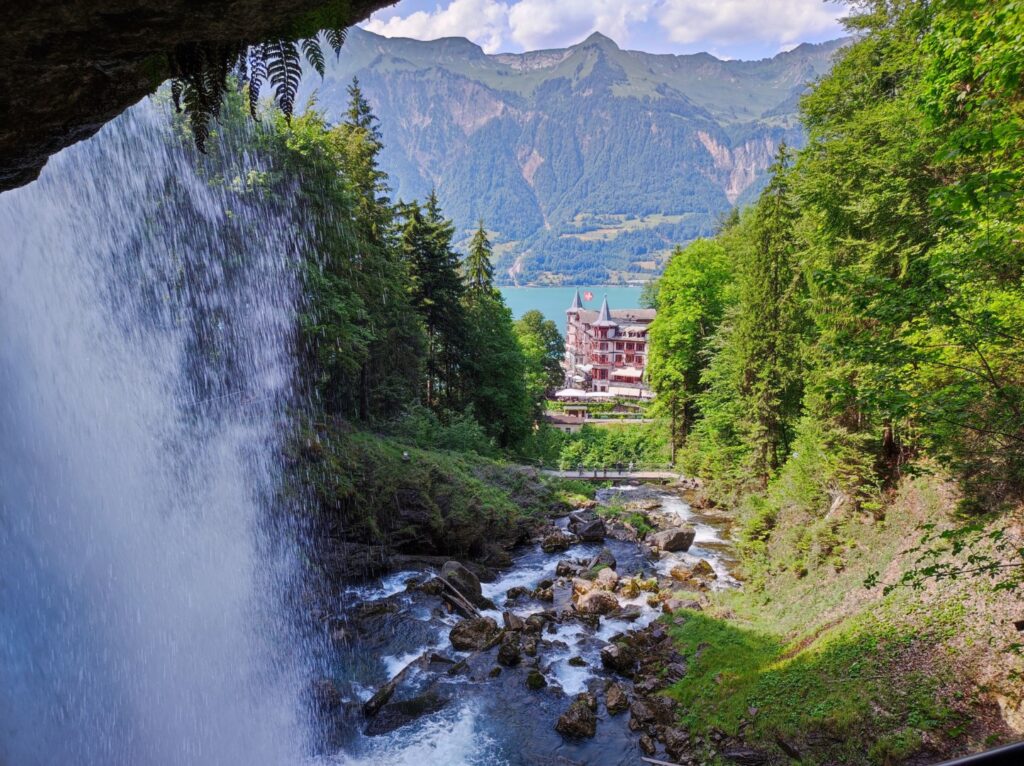
The man who started it before Scorsese: Conrad von Rappard
Conrad von Rappard was a Rhineland lawyer and revolutionary who had been forced to flee Germany after 1849 for his political activities. He reinvented himself in Switzerland as a microscopist, establishing an institute near Bern that made scientific preparations sold across Europe. Then his eyes gave out — the chronic damage of years of microscope work — and his doctors advised rest in the green forests around Lake Brienz.
In 1855, seeking nothing more than relief from his failing vision, he acquired a small chalet at the Giessbach falls. What he found there changed the course of his life and, eventually, the course of this hotel’s extraordinary story.
He commissioned a proper guesthouse — it still stands today as a wing of the building you see from the lake. He hired a Bernese pyrotechnician named Professor Hamberger to do something that had never been done in Switzerland: illuminate the waterfall at night with coloured Bengal fire. The falls — fourteen cascades dropping five hundred metres into Lake Brienz — were lit in crimson, emerald, and gold. Steamboats brought visitors across the dark water to watch. The spectacle appeared in every guidebook of the era. Travellers came from London and Paris specifically for an evening at the Giessbach.
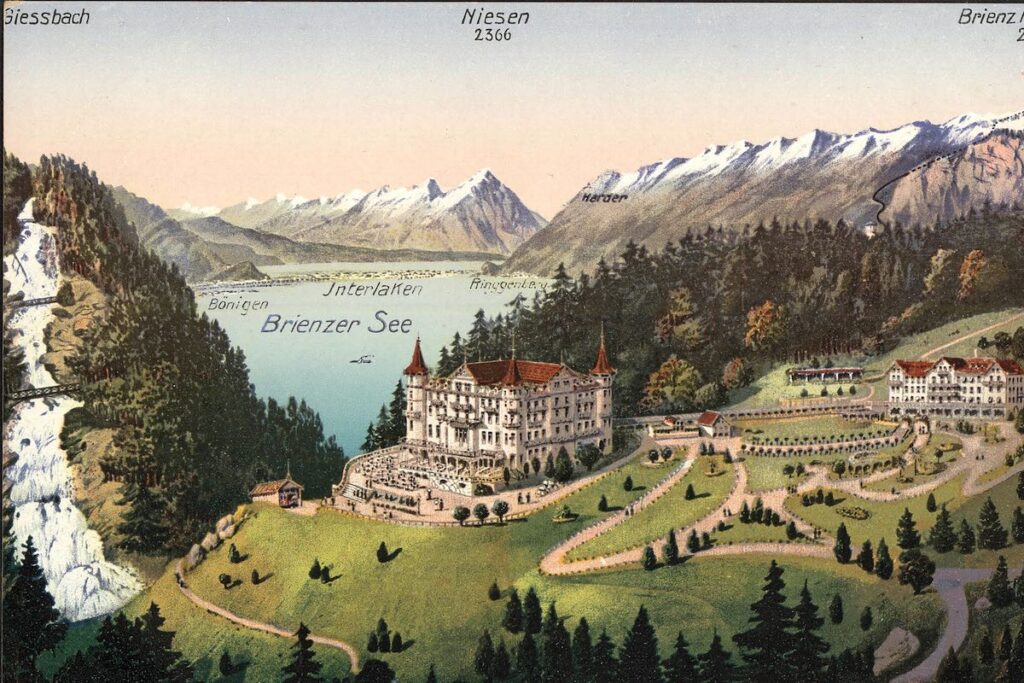
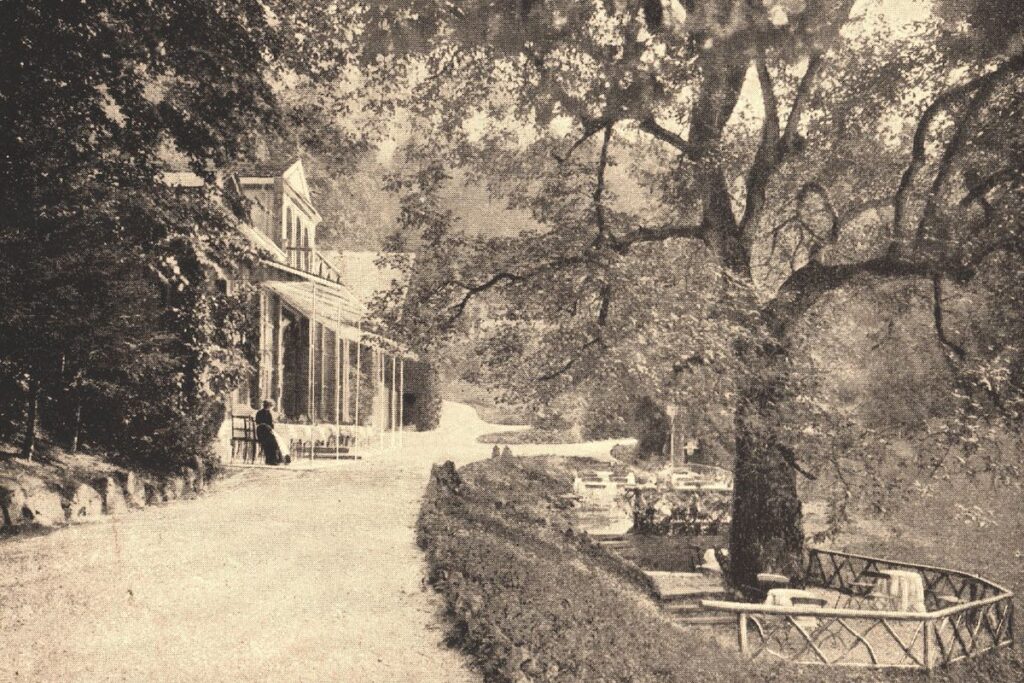
In 1866, John Ruskin — the most influential art critic in Victorian England, the man who had transformed how an entire generation thought about beauty, nature, and the Alps — stood on the shore of Lake Brienz and watched the waterfall burn with coloured fire. He was in good company. The Giessbach had already attracted Goethe, Mendelssohn, and Byron’s literary circle before a single stone of the grand hotel had been laid.
Conrad von Rappard understood something that every filmmaker who has come to the Giessbach since has confirmed: some places are designed to hold stories. The falls, the forest, the dark water below, the light moving through the spray — this is not a neutral landscape. It is a stage. Conrad built it to be experienced as spectacle. Spectacle is what it has been ever since.
The screen lineage and blockbusters filmed at Hotel Giessbach
One hundred and forty years after Conrad von Rappard first lit those falls in coloured fire, a different kind of spectacle arrived at the Giessbach.
In 2001, Steven Spielberg and Tom Hanks brought Band of Brothers — the most acclaimed television drama of its era — to the Grandhotel. The hotel’s Belle Époque facade stood in for an Austrian grand hotel in the final episode, the 101st Airborne at ease in a building of improbable elegance after years of war. The Giessbach doubled as Europe’s vanishing grandeur. It was the right building for that story.
In 2017, Paul Thomas Anderson arrived to film scenes for Phantom Thread, Daniel Day-Lewis’s final film. A story about obsession, beauty, and the tyranny of taste. The hotel was already the kind of place such a story demanded — preserved, particular, carrying its past in every corridor. Day-Lewis moved through it as though the building had been waiting for him.
Then, in 2019, a South Korean production team filmed a brief scene for Crash Landing on You — the romantic drama that became one of the most-watched streaming series in the world, transforming the Jungfrau Region into a global pilgrim destination for Korean and Asian visitors. The Giessbach appeared as a music school from the male lead’s Swiss youth. Within months, fans were arriving by boat from Interlaken specifically to stand in the shot.
And now Martin Scorsese. ‘What happens at night’ is a Gothic horror story about a married couple who check into an isolated European hotel and find it follows different rules from the world they came from. He spent three years developing the film, personally scouting the Bernese Oberland in autumn 2025, arriving the following spring with his cast and crew to shoot over four days and three nights.
The production chose this hotel for the same reason Anderson chose it, the same reason Spielberg chose it, the same reason Korean drama fans came by boat to photograph it. The Giessbach already looks like the setting for a story about the uncanny. It looks like it has always been there and will always be there. It looks like a building that knows something you don’t.
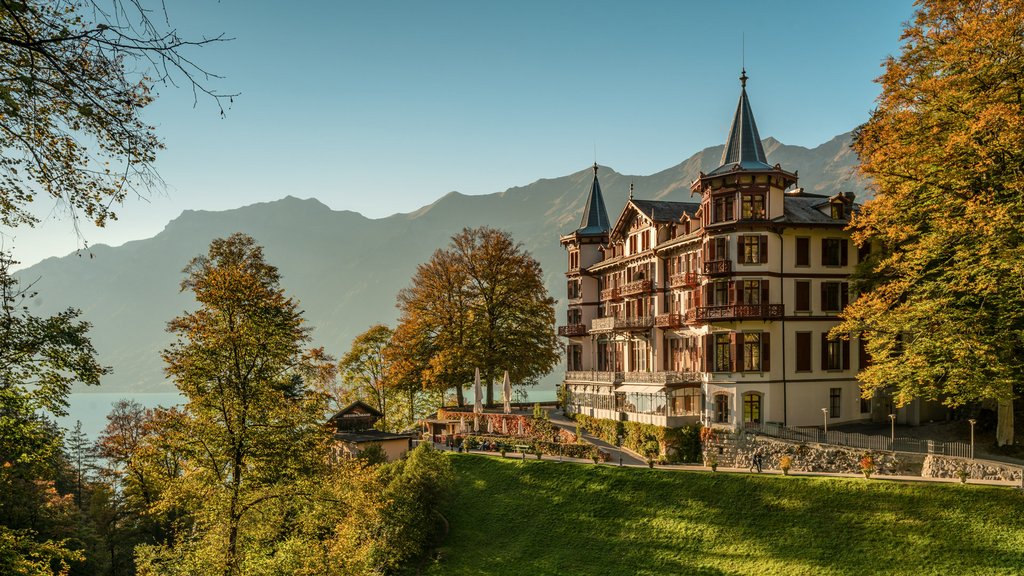
Visit the “What happens at Night” filming location
What Happens at Night releases on Apple TV+ in spring 2027. It will be the seventh film Martin Scorsese has made with Leonardo DiCaprio. It is Jennifer Lawrence’s first film with Scorsese. Between the director and his two leads, the production accounts for multiple Academy Award wins and more than forty nominations. It will be seen by tens of millions of people.
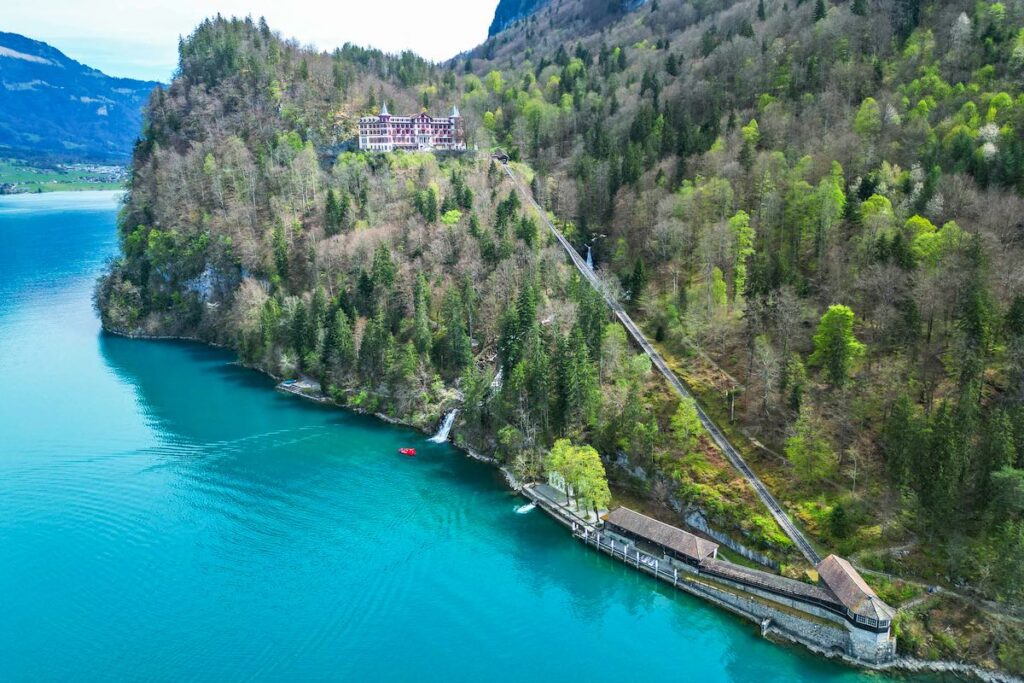
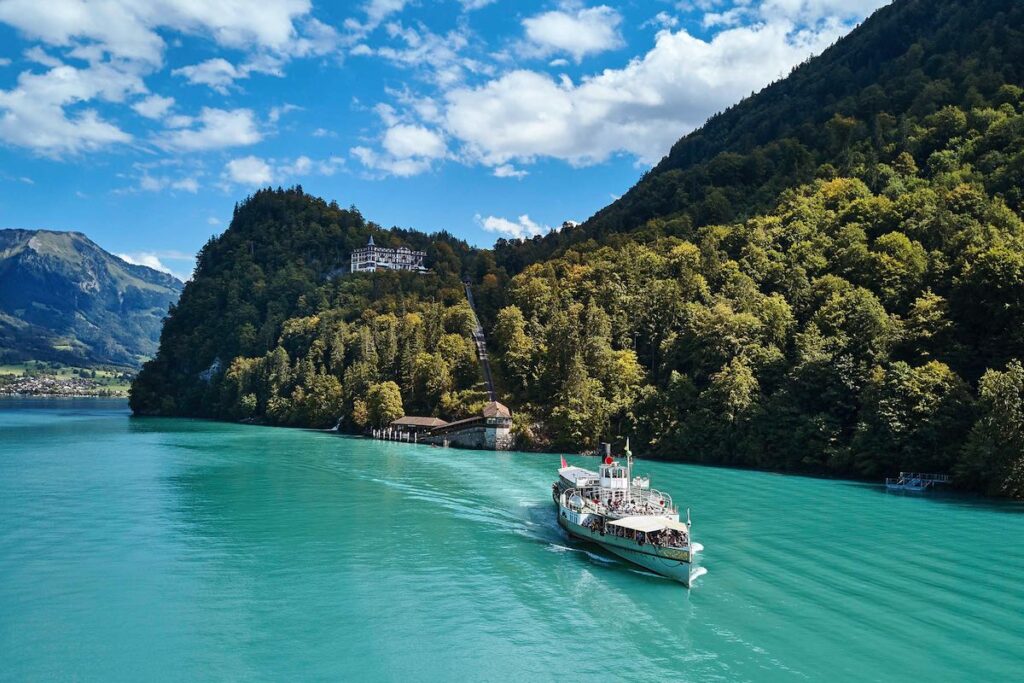
After seeing the film you too can see and visit the grandeur of the Grandhotel Giessbach and feel the pull of the place — the waterfall, the forest, the old funicular ascending through the trees. You can magically arrive by boat from Interlaken, approaching the hotel and its waterfall from its most dramatic and impressive angle, just like visitors have arrived here for a hundred and seventy years. Just like them you can take the 150 year old funicular up from the landing stage and stand on the terrace that Leonardo di Caprio, Jennifer Lawrence and Mads Mikkelsen stoon on!
Conrad von Rappard was not a filmmaker. He was a sick man who bought a plot of land beside a waterfall and couldn’t stop improving it. But he understood, in the same instinctive way that every great filmmaker understands it, that beauty properly framed becomes something larger than itself. That a waterfall in the right light is not just a waterfall. That some places, given the right attention, become impossible to forget.
The Grandhotel Giessbach is one of those places. It has been one of those places since 1855.
Conrad von Rappard knew this in 1855. Scorsese confirmed it last week.
The Grandhotel Giessbach is a primary location in the Icons of Interlaken Loop 3 — Lakeside Legends. Take the boat from Interlaken Ost, ride the funicular up through the forest, and find Clara von Rappard’s painting in the salon.