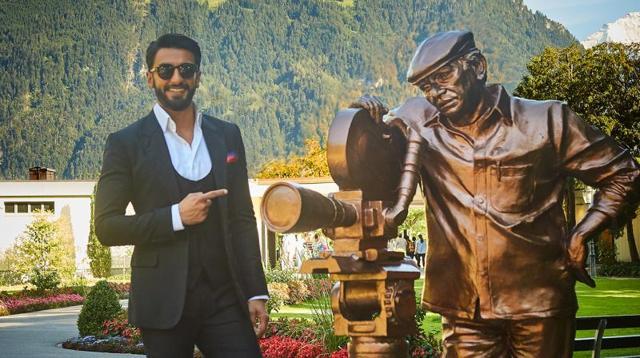
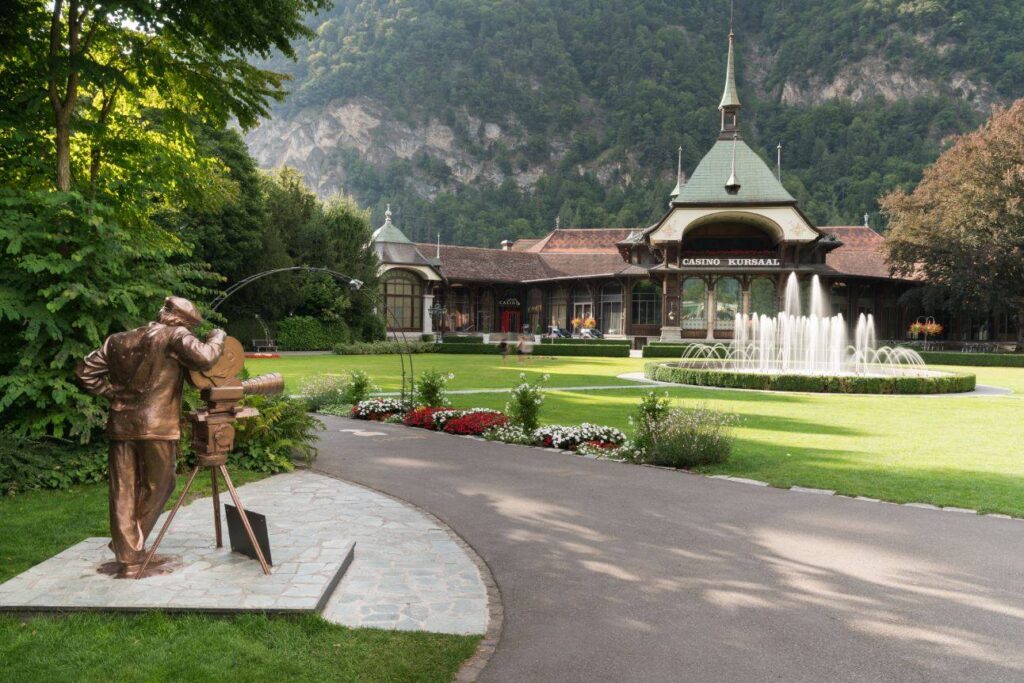
In a small, elegant garden in the Swiss Alps — a few hours by train from Zurich, in a valley framed by three of the most famous mountains on earth — there stands a bronze statue of an Indian film director. He weighs 350 kilograms. He has been given his own train. A luxury hotel has named a suite after him. A lake in the surrounding mountains carries his name informally, because the local community felt it only right. His name is Yash Chopra, and if you have never heard of him, it is only because you did not grow up watching Bollywood — the vast, exuberant, song-and-dance-driven Hindi film industry that produces more films each year than Hollywood and commands an audience of over a billion people. To that audience, this quiet Swiss valley is not a foreign country. It is, thanks entirely to Chopra’s camera, the place where love stories happen.
The Director Who Painted the Alps in Chiffon: How Yash Chopra Made Interlaken Bollywood’s Home
Walk into the Kursaal Garden at the heart of Interlaken and you will find a 350-kilogram bronze figure of a man holding a movie camera, his gaze fixed permanently toward the snow-capped Jungfrau. He is not Swiss. He is not European. He is, by any measure, one of the most consequential directors in the history of world cinema — and he sent more tourists to the Jungfrau Region than any Swiss marketing campaign ever could.
His name is Yash Chopra.
Born in Lahore on 27 September 1932, Chopra spent more than five decades reshaping Indian popular culture from behind a camera. By the time he died in Mumbai on 21 October 2012 — aged 80, from dengue fever — he had directed 22 films, founded Yash Raj Films, one of India’s most powerful production companies, won six National Film Awards and 11 Filmfare Awards, received France’s Légion d’Honneur, and been awarded the Dadasaheb Phalke Award, India’s highest cinematic honour. He had also, almost incidentally, turned a quiet Swiss valley into the aspirational centre of the romantic imagination for over a billion people.
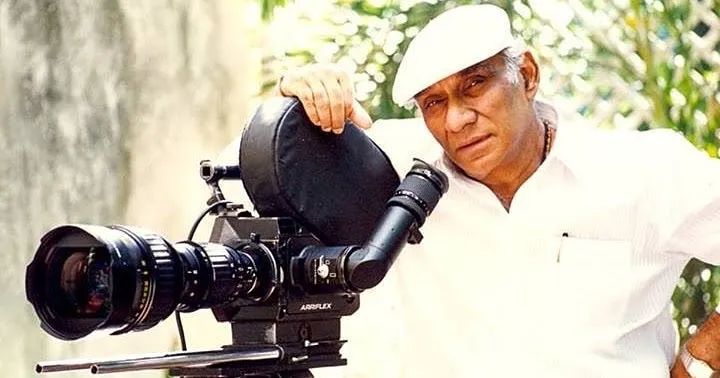
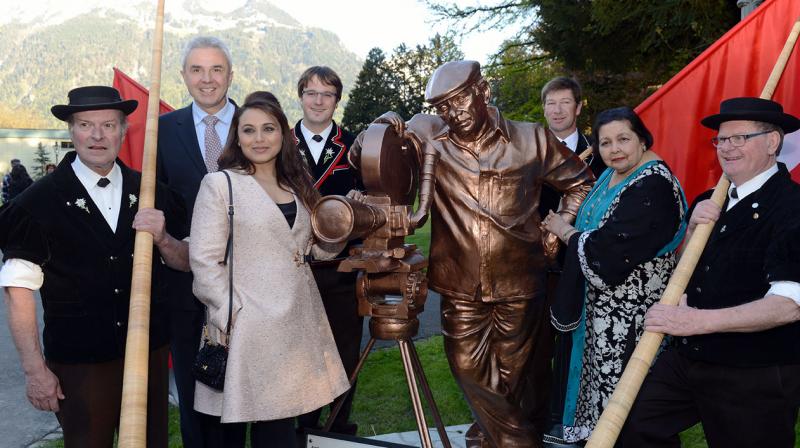
The 350kg statue was unveiled in May 2016, organised by Interlaken Tourism and Jungfrau Railways, and attended by Swiss ministers, his wife Pamela Chopra, and his daughter-in-law, the actress Rani Mukerji. It is not a token gesture. It is a recognition that this man changed the economic and cultural trajectory of a region.
Substituting Kashmir for the Bernese Oberland
Bollywood’s relationship with Switzerland did not begin with Chopra. The first Indian film shot in the country was Raj Kapoor’s Sangam in 1964, with its sweeping sequences around Grindelwald and Interlaken. But it was Chopra who transformed occasional location visits into a sustained, deeply personal artistic practice — and who made Switzerland feel, to hundreds of millions of Indian viewers, like a place they had already been.
The origins of this passion are telling. According to Wikipedia’s detailed account of Indian cinema and Switzerland, Chopra first visited Switzerland on his honeymoon — legend holds he was captivated by Gstaad — and the region never left him. His first Swiss film followed in 1985 with Faasle, but the Bernese Oberland as a cinematic idea was still forming.
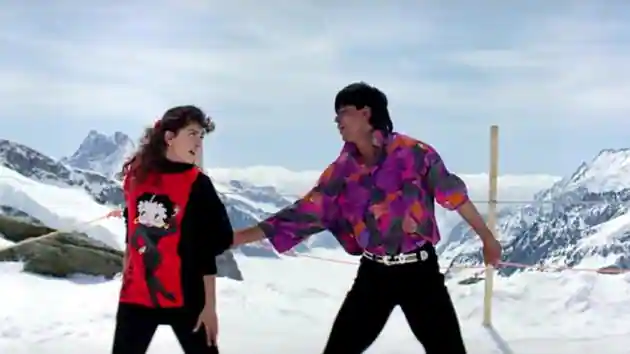
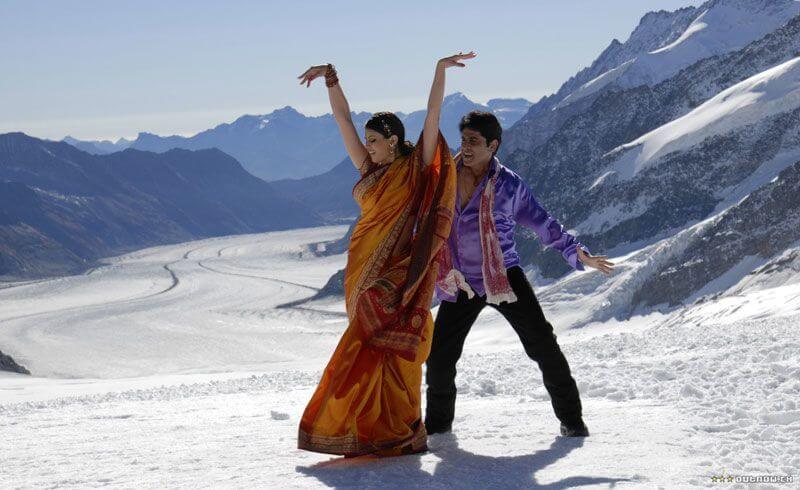
The context matters. By the 1980s, political unrest in Kashmir — long Bollywood’s preferred backdrop for sweeping mountain romance — had made filming there dangerous. Directors needed a landscape that could carry the same emotional weight: high peaks, green valleys, crystalline light. The Bernese Oberland was not merely a substitute. In Chopra’s hands, it became something more vivid than the original.
His artistic reasoning was precise. The almost electric green of alpine meadows in summer provided the perfect contrasting canvas for the brightly coloured chiffon saris worn by his heroines. The white of glacial snow threw the warmth of skin and fabric into relief. This was not an accident of geography. It was a deliberate visual grammar — a signature approach built from an understanding of how colour functions emotionally on screen.
Chandni and the Image That Defined a Generation
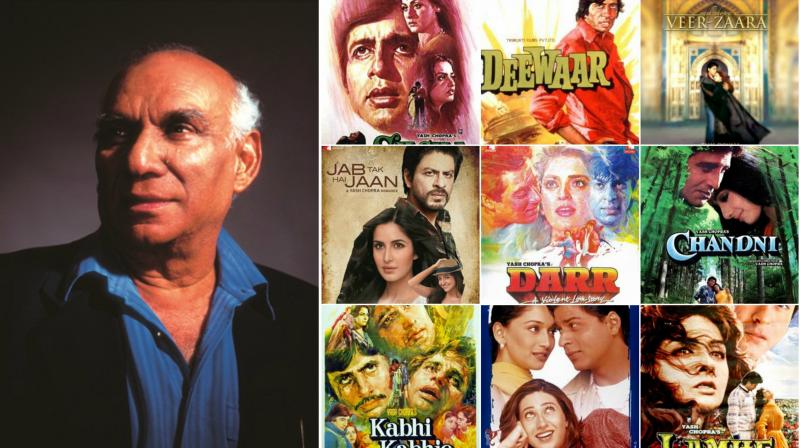
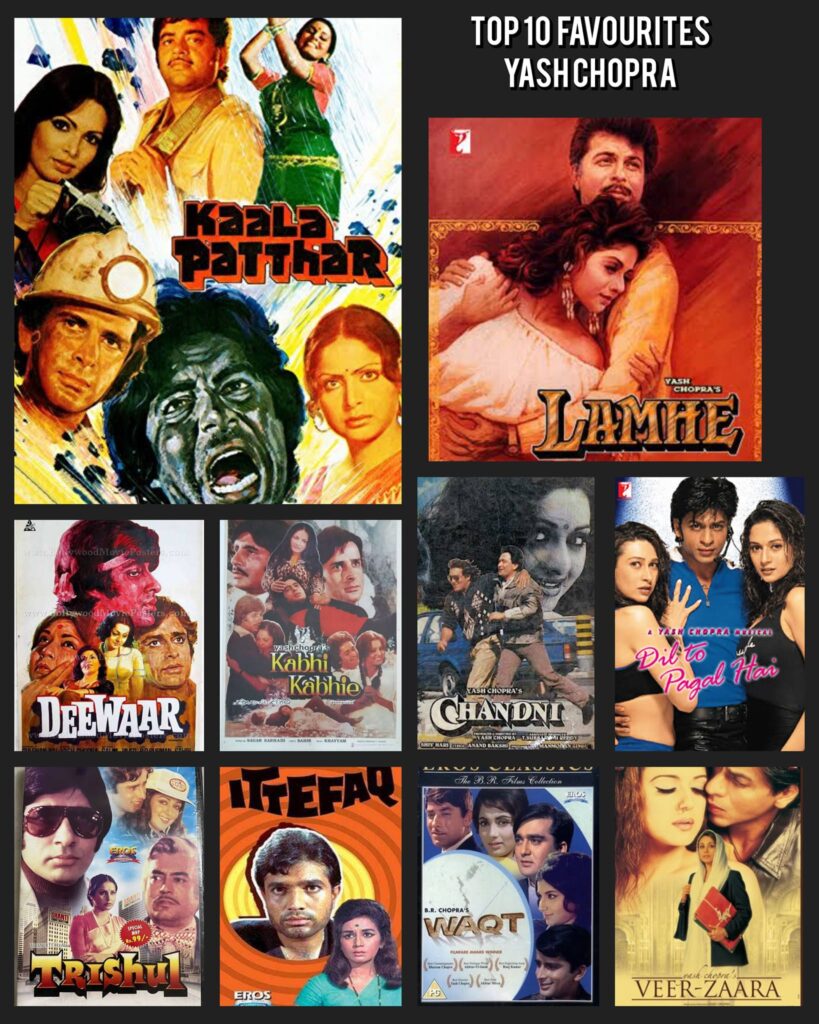
It was Chandni (1989) that first truly ignited Indian audiences. Sridevi — one of the defining stars of her era — in white chiffon against a landscape of snow and sky: the image was so immediate, so emotionally direct, that it lodged in the cultural memory of a generation. The film implanted Switzerland in India’s popular consciousness in a way no tourism board had managed. Chandni revitalised the romantic genre in Hindi cinema and confirmed Chopra as its supreme practitioner.
Two years later came Lamhe (1991) — widely considered by critics to be Chopra’s most accomplished film, though it found its audience only later. Shot extensively in Switzerland, it demonstrated that his Swiss sequences were not merely decorative but structural: the landscape carried meaning, shaped character, defined the emotional register of the story.
Then came Darr (1993) and Dil To Pagal Hai (1997), both shot in Switzerland and both featuring a young Shah Rukh Khan. These films cemented Khan as the defining face of Swiss-Bollywood romance — a partnership with Chopra that would prove transformative for both men, and for the region they filmed in.
DDLJ and the Geography of a Love Story
No film in the Yash Raj canon reshaped Indian travel more decisively than Dilwale Dulhania Le Jayenge (1995). Directed by Chopra’s son Aditya, produced under the Yash Raj Films banner, and starring Shah Rukh Khan and Kajol, DDLJ became one of the most beloved films in the history of Indian cinema — and its European sequences were filmed almost entirely across the Bernese Oberland.
The geography of the film is the geography of the region, rendered in longing. Audiences who have seen the film can trace the story across real locations:
- The park at Interlaken’s Höhematte, where Raj makes an awkward apology to Simran and her friends.
- Zweisimmen railway station, where the couple miss their train after Simran lingers to buy a cowbell — a detail so precisely observed that the station’s character is inseparable from the scene.
- The Gstaad Promenade, the car-free village street where the song Zara Sa Jhoom Loon Main was filmed — Kajol running past boutiques and chocolate shops, Khan following with the particular mix of exasperation and devotion that defined his generation.
- The Launen Enge meadows, a long corridor of open land bordered by rolling hills, where the song Ho Gaya Hai Tujhko captures the precise moment two people realise they are in love.
- The Saanen bridge and its adjacent railway station, where Simran confesses she is being sent to India to marry a stranger — and the bridge itself, where the film’s iconic “palat” scene was later recreated by so many visitors that it became one of the region’s unofficial landmarks.
- The St Mauritius Church in Saanen, dating from the 13th century, whose steeple stops Simran mid-stride.
- The interior of St Grat Church in Montbovon, a quaint hamlet on the River Sarine, where Simran prays with Khan’s irreverent presence beside her.
- The Jungfraujoch — Europe’s highest railway station — for the film’s snow sequences, the Alps reduced to pure white abstraction.
The cumulative effect of these locations on Indian travel was measurable and immediate. Indian tourism to Switzerland increased by 243% in 1995 alone — the year DDLJ was released. Around 200 Indian films have now been at least partially filmed in Switzerland, a phenomenon that Chopra largely created and cemented. When Indian President Ram Nath Kovind visited Switzerland in 2019, he observed simply: “Bollywood has taken Switzerland to every nook and corner of India.”
The Landscape Named in Yash Chopra’s Honour
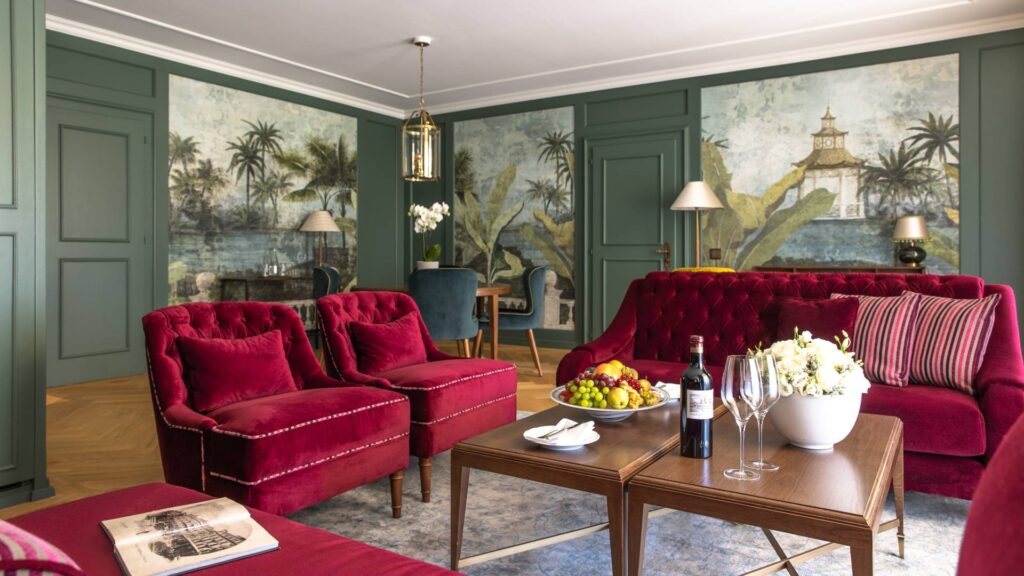
The Swiss have an unambiguous way of acknowledging what Chopra did for the region. Jungfrau Railways named a train in his honour — a distinction shared only with Adolf Guyer-Zeller, the railway’s founder. The Victoria-Jungfrau Grand Hotel, whose history stretches back to the era when Queen Victoria shaped the valley’s identity, dedicated an entire suite to him — acknowledging that he, like the queen, had made this place magnetic to an entire culture.



There is also a lake. Lauenensee, near Gstaad in the Bernese Oberland, is now known informally as Yash Chopra Lake — a quiet, glacier-fed stretch of water that carries his name not because any scene was filmed there, but because the region recognised that the landscape itself had become inseparable from his vision of it.
Just as Lord Byron brought the brooding currents of British Romanticism to this valley in the 1800s — making the Alps a canvas for European melancholy and longing — Chopra brought the world’s largest film audience. He translated the same mountains into a language of colour, movement, and romantic possibility for a billion people who had never stood in an alpine meadow but felt, through his films, that they knew exactly what it looked like.
A Legacy Still Arriving
Chopra’s last film as director, Jab Tak Hai Jaan, was released on 13 November 2012 — three weeks after his death. It starred Shah Rukh Khan, and it was, in many ways, a farewell. The film’s sequences in Kashmir and London gestured toward the geographical range of his career. But it is Switzerland — and specifically the Bernese Oberland — that remains the landscape most indelibly associated with his name.
To honour his legacy Netflix released a 4-part mini series about him named ‘the romantics’.


Today, Bollywood tourism is a significant and structural part of the Interlaken economy. Visitors from across South Asia arrive specifically to walk the routes his camera traced: the meadows, the stations, the mountain passes. The “Bollywood tours” of central Switzerland, which Switzerland Tourism has formally incorporated into its marketing, are a direct consequence of his choices as a filmmaker.
The bronze figure in the Kursaal Garden stands with his camera raised — not as an exhibit, but as a navigational point. He is looking at the mountains. He is still making the film.
Stand Here:
The Yash Chopra Statue, Kursaal Garden, Interlaken. Stand exactly where he stood, looking toward the Jungfrau, and consider how one man’s visual instinct turned a Swiss valley into the emotional homeland of a billion people’s idea of romance.
Things to Do Here
- Stroll through the Kursaal Garden and photograph the Yash Chopra statue — then follow the DDLJ trail south through the Bernese Oberland to Gstaad, Saanen, and Montbovon.
- Book a tandem paragliding flight and soar above the Höhematte, the same park where Raj and Simran’s story unfolded on screen.
- Take afternoon tea at the Victoria-Jungfrau Grand Hotel — where the dedicated Yash Chopra suite keeps the connection between Indian cinema and alpine luxury very much alive.