Whether the man himself truly existed in historical reality is a question best left for academics to endlessly debate. Whether his story matters to the soul of Switzerland is absolutely unquestionable. Wilhelm aka William Tell is the country’s founding hero and ultimate iconic legend and his open-air theater here in Interlaken is the spiritual home of this Swiss giant!
The Crossbowman and the Tyrant
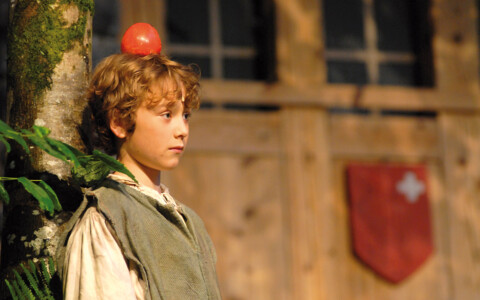
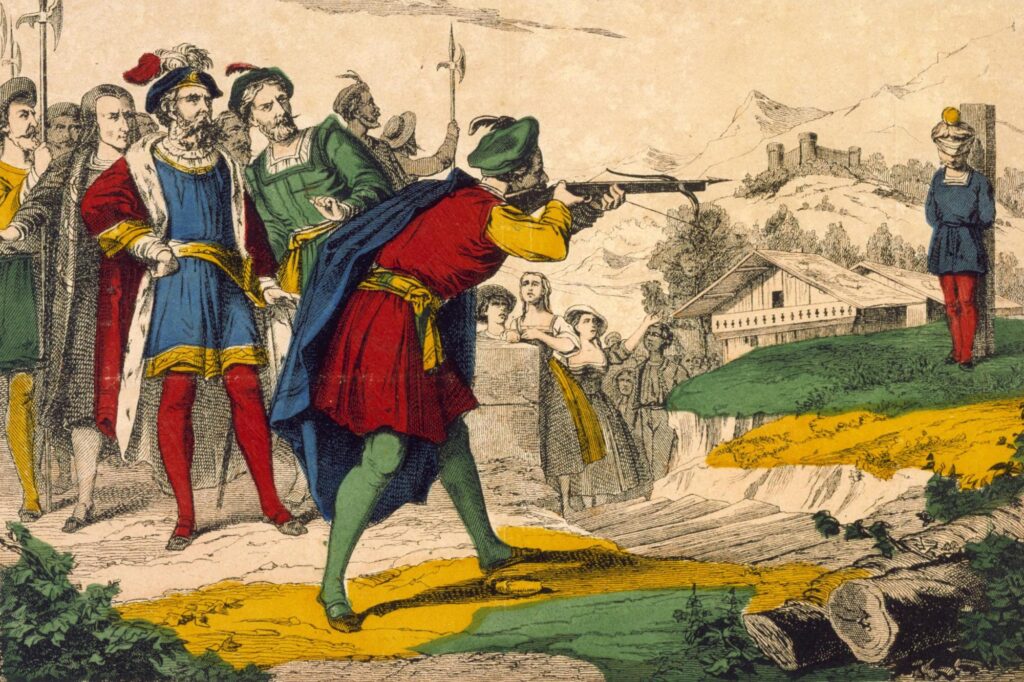
The legend of the Wilhelm Tell story in Switzerland is the ultimate, foundational myth of the Swiss nation. According to deep alpine folklore, Tell was a masterful, quiet crossbowman from the nearby canton of Uri in the 14th century. When a cruel, tyrannical Habsburg bailiff named Gensler demanded that the locals bow to a hat placed on a pole in the town square, Tell flatly refused. Arrested for his defiance, he was forced into a sadistic wager: shoot an apple from his own young son’s head to save their lives. Tell flawlessly split the apple, but boldly confessed he had hidden a second, deadly bolt in his coat to kill the tyrant had his son died. His subsequent daring escape ignited the burning fire of Swiss independence.
How Goethe Brought the Tell Myth to the Stage
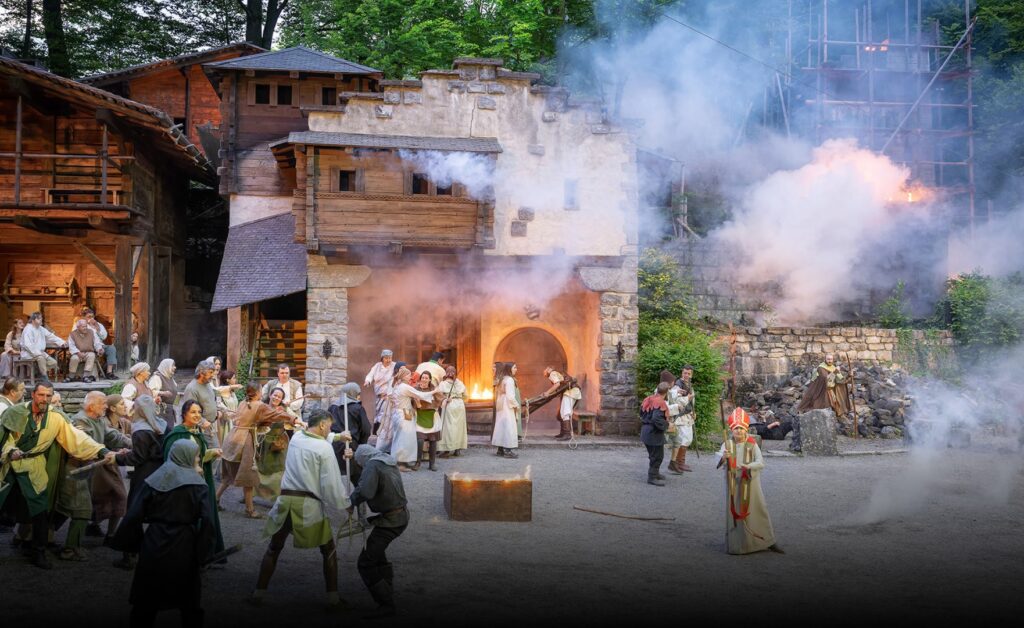
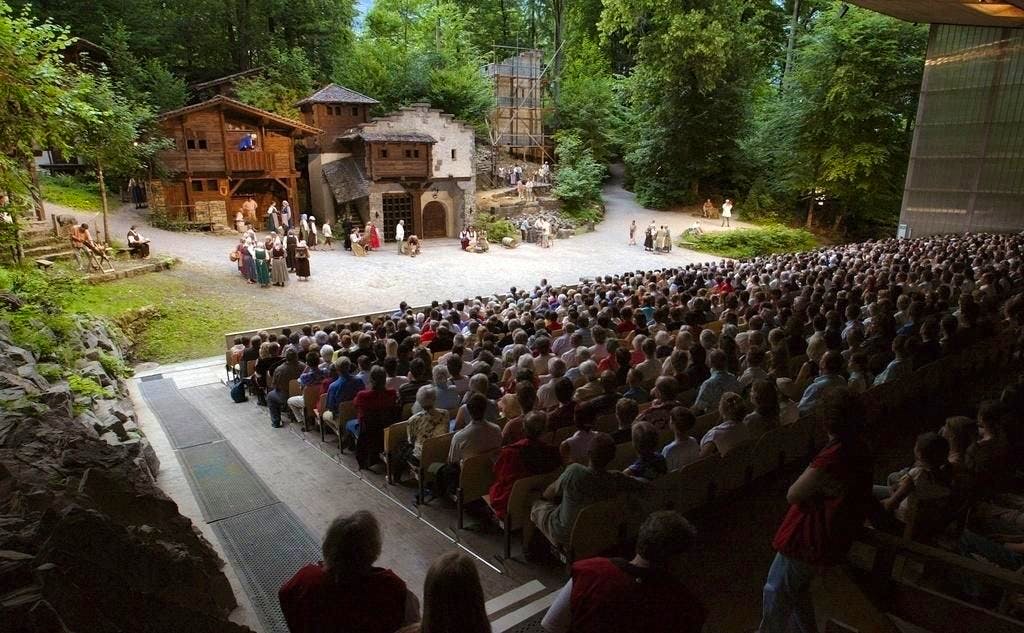
But what does a rebellious hero from the next canton over have to do with Interlaken? Everything as his story has been performed for 125-year in an epic open-air theater right in the center of town. This Swiss institution is very well known among Swiss but most tourists will walk past it without noticing its greatness. Tell perfectly represents the fierce, unyielding independence of the alpine people—a spirit carved directly into the deep valleys and sheer rock faces of the Bernese Oberland.
The gritty local story finally gained massive global literary fame in 1804 when Friedrich Schiller wrote his iconic, sweeping play, Wilhelm Tell. Amazingly, Schiller had never actually set foot in Switzerland! He wrote the masterpiece entirely based on the obsessive research and vivid, highly emotional descriptions brought back to him by his close, brilliant friend, the German poet Johann Wolfgang von Goethe. Goethe had meticulously collected the local folklore from the mountain people while weeping at the overwhelming beauty of the Staubbach Falls in the Lauterbrunnen Valley in 1779.
The Tell Arena & Swiss Spirit of Alpine Independence
Tell is not just a character in a book; he is a foundational principle. He embodies the powerful idea that the harsh mountains grant an independence of spirit that no empire, no matter how powerful, can ever suppress. It is a defiant spirit that has resonated loudly through every era of the valley’s history, from the desperate, brilliant unification efforts at the Unspunnen Festival and its 83kg throw-able boulder to the defiant, creative survival of starving local craftsmen like Christian Fischer.
Today, the Tell Arena and the Tell-Spiele (especially when the performances are running during the summer) serve as the true spiritual home of the Wilhelm Tell legend. While historians may argue over facts, the local community has built a living monument to his story. It is here, surrounded by the natural amphitheater of the woods and the echoing Alps, that you can truly see and feel the defiant myth of Tell breathe.
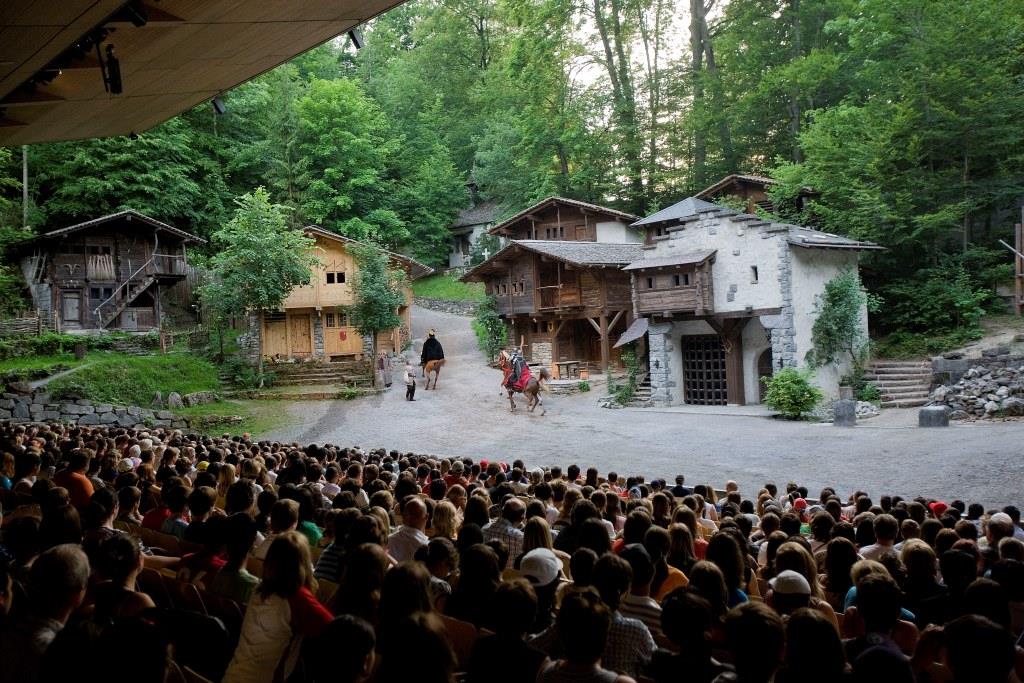
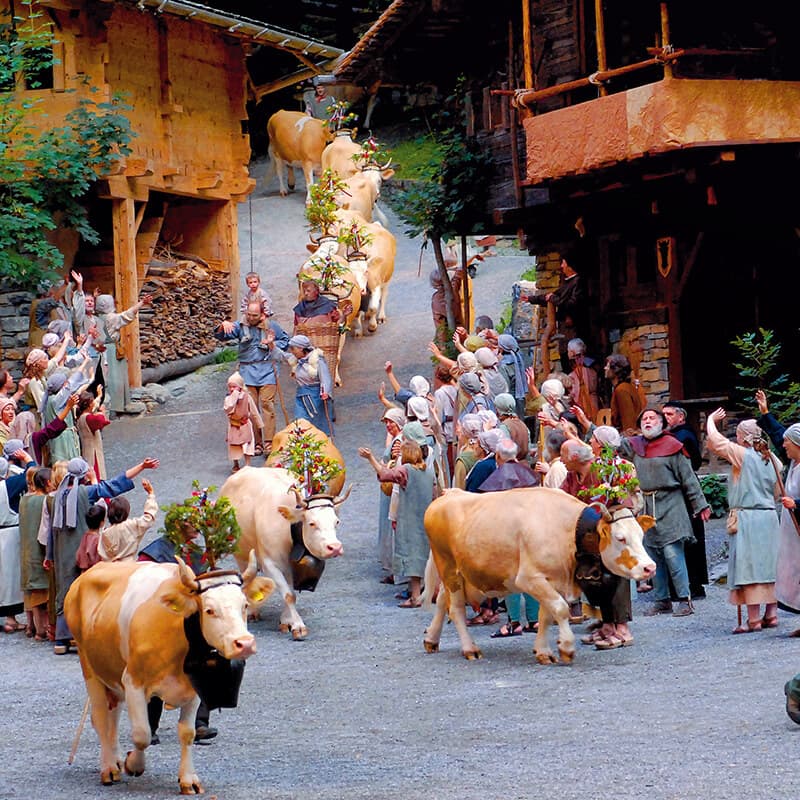
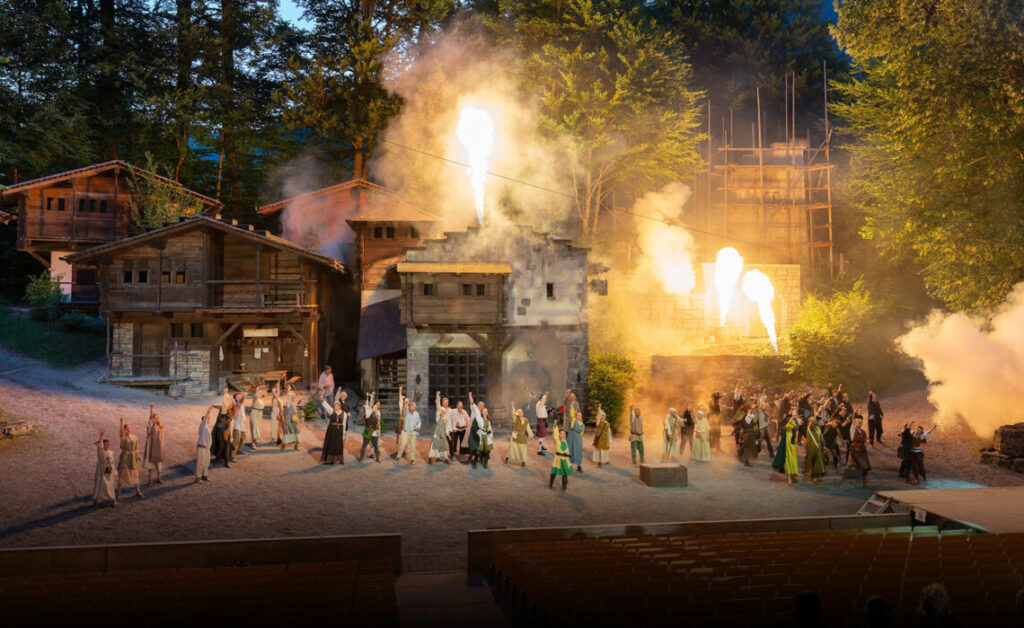
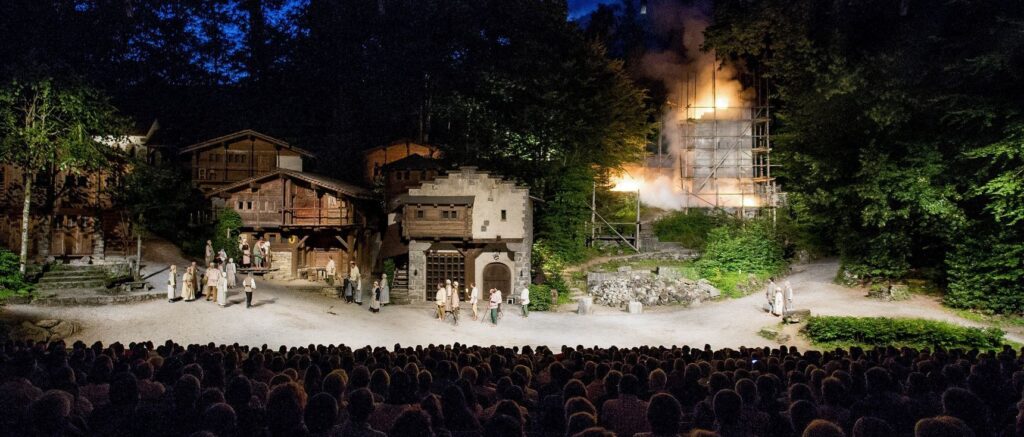
Stand Here: The Tell Arena, where his story has been told in an epic play ever since 1912 and his spirit lives on in the open-air theater and tell forest village.